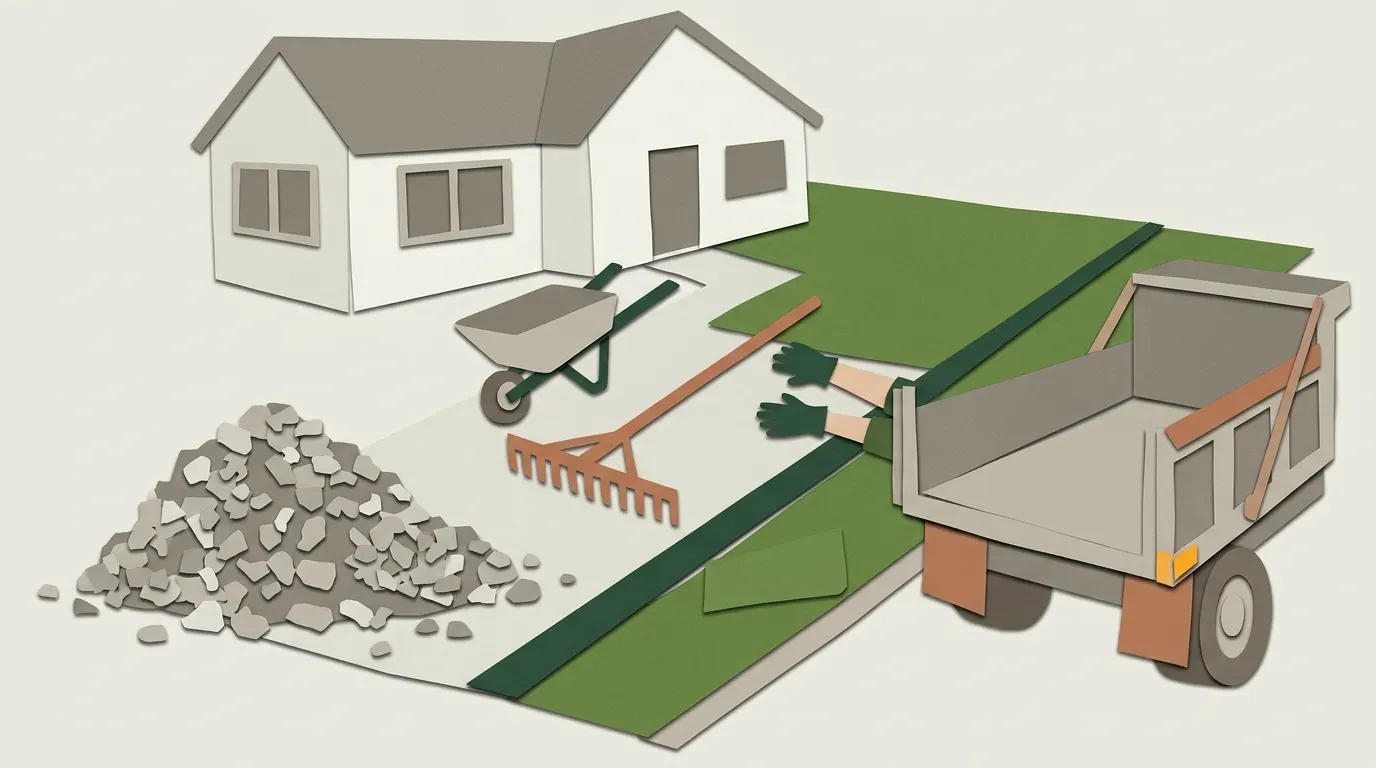
National ballpark · a 600 sq ft crushed-stone driveway, 4 in deep
This is a planning range, not a quote.
Limited data: installed gravel driveway per sq ft (sources disagree); crushed stone price per ton (sources disagree); gravel delivery fee (sources disagree). The real range may be wider.
Rates assume a standard 4-inch gravel layer; a deeper layer adds material, not labor. Grading, if your site needs it, is extra.
| Cost | Low | Typical | High |
|---|---|---|---|
| Gravel and base materials | $340 | $600 | $900 |
| Labor | $340 | $600 | $900 |
| Delivery | $50 | $75 | $100 |
| Total | $730 | $1,280 | $1,900 |
How the gravel driveway cost calculator works
Enter your ZIP code, the driveway's area in square feet, the type of gravel and the depth of the layer: 4, 6 or 8 inches. The calculator multiplies the area by an installed price per square foot, splits that into materials and labor, then adjusts the materials half for the gravel type and depth you picked. It adds one delivery and adjusts the total for wages and prices in your state.
You get three numbers. Low is a simple job on firm, level ground near the road. Typical is where most quotes fall. High covers longer hauls, soft soil and busy seasons. The breakdown shows gravel and base materials, labor and delivery as separate lines, so you can match them against a contractor's quote.
The installed rates assume a standard 4-inch layer. None of our sources say what depth their prices are for, so this is our assumption, and we say so. A deeper layer adds gravel, not labor, in the calculator. Grading isn't included, because it depends on your site more than on the size of the driveway. The full method is on How we calculate.
Gravel price by type
Gravel type changes what you pay for the material itself. The table shows the price per ton for the gravel alone, before spreading and delivery.
| Option | Low | Typical | High | Unit |
|---|---|---|---|---|
| Crushed stone * | $30 | $65 | $65 | /ton |
| Pea gravel * | $50 | $75 | $100 | /ton |
| Crusher run | $25 | $30 | $35 | /ton |
* Limited data: one source, sources that disagree widely, or a single figure.
- Crushed stone is angular rock broken to a set size. The sharp edges lock together, so it packs into a firm surface. The calculator uses it as the starting point. Our sources disagree widely on its price per ton.
- Pea gravel is small, rounded stone. It looks neat and drains well, but the round pieces roll under tires and shift more than crushed stone. It's the priciest of the three per ton, and our sources disagree on how much. For our 600 sq ft example it comes to $780–$2,040, typical $1,370.
- Crusher run is crushed stone mixed with stone dust. The dust fills the gaps and packs hard, which is why many contractors use it as a base layer. It's the cheapest of the three, and the most consistent across sources. The same driveway in crusher run costs $540–$1,410, typical $950.
Many driveways use two types: a coarse base and a nicer top layer. The calculator prices one type at a time, so if you plan a mix, run it for each layer and add the parts.
Measuring your driveway
Area is the biggest input. Measure the length and the width in feet and multiply them. A driveway 12 feet wide and 50 feet long is 600 sq ft, the size of our example. For a curved or L-shaped driveway, split it into rectangles, measure each and add them up. Include any turnaround or parking pad you want covered at the same time.
If you plan to widen the drive later, price the bigger area now as well. A second delivery and setup later usually costs more than doing it in one trip.
What affects the price
Area
The calculator scales labor and materials directly with square feet. A driveway twice as big costs about twice as much, apart from delivery. Real quotes for very small jobs can cost more per square foot, because a crew still has to show up and set up.
Gravel type
Type changes only the materials half of the bill. Labor stays the same in the calculator, because spreading pea gravel takes about as long as spreading crushed stone. That's why switching gravel moves the total less than the price per ton might suggest.
Depth
A 6-inch layer needs half again as much gravel as a 4-inch one, and 8 inches needs twice as much. The calculator scales the material line by depth and leaves labor alone. In practice, a deep driveway is usually laid in more than one pass, so expect real quotes to add some labor too.
Delivery
The calculator adds one delivery at $50–$100, typical $75. Our sources disagree on this fee, and a bigger driveway may need more than one load. Sources also disagree on how much a cubic yard of gravel weighs, so when one supplier quotes by the ton and another by the yard, ask both for the total delivered price.
Grading and site prep
Grading levels the ground and gives it a slight slope so water runs off. If you're laying gravel over an old driveway that's still firm, you may not need much. If you're cutting a new path through lawn or soft soil, grading can cost as much as the gravel. Our sources put it at $1.10–$5.50 per square foot and disagree widely, so the calculator leaves it out and flags it in the result.
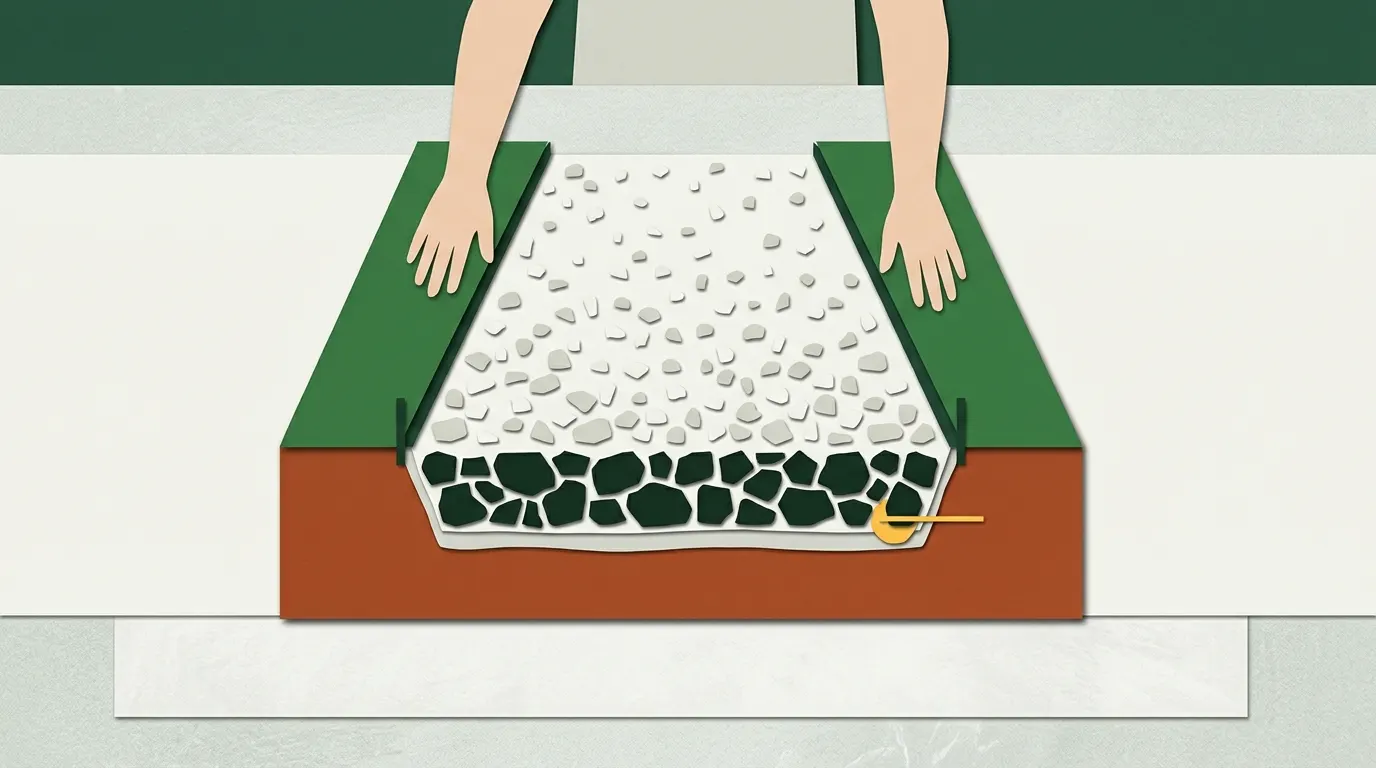
Landscape fabric
Fabric under the gravel can slow how fast stone sinks into soft soil and keep weeds down. It isn't in the calculator. We have one source for it, at $0.05–$0.10 per square foot for the material, so treat that as a rough idea.
Edging and drainage
Edging keeps gravel from spreading into the lawn, and a culvert or drain may be needed where the driveway crosses a ditch. Our data doesn't price either. If you need them, ask for each as its own line.
Gravel driveway cost by state
Labor is about half of a gravel driveway bill, so local wages explain most of the gap between states. For our 600 sq ft crushed-stone example, the typical price runs from $1,090 in Arkansas and $1,120 in Alabama and Oklahoma to $1,590 in Illinois and New Jersey and $1,850 in Hawaii.
- Alabama$1,120
- Alaska$1,480
- Arizona$1,250
- Arkansas$1,090
- California$1,550
- Colorado$1,290
- Connecticut$1,430
- Delaware$1,230
- District of Columbia$1,410
- Florida$1,190
- Georgia$1,150
- Hawaii$1,850
- Idaho$1,260
- Illinois$1,590
- Indiana$1,370
- Iowa$1,250
- Kansas$1,180
- Kentucky$1,230
- Louisiana$1,130
- Maine$1,230
- Maryland$1,300
- Massachusetts$1,470
- Michigan$1,280
- Minnesota$1,470
- Mississippi$1,120
- Missouri$1,320
- Montana$1,280
- Nebraska$1,230
- Nevada$1,330
- New Hampshire$1,300
- New Jersey$1,590
- New Mexico$1,150
- New York$1,490
- North Carolina$1,180
- North Dakota$1,270
- Ohio$1,320
- Oklahoma$1,120
- Oregon$1,410
- Pennsylvania$1,290
- Rhode Island$1,350
- South Carolina$1,170
- South Dakota$1,230
- Tennessee$1,190
- Texas$1,170
- Utah$1,250
- Vermont$1,260
- Virginia$1,240
- Washington$1,490
- West Virginia$1,180
- Wisconsin$1,380
- Wyoming$1,250
Ways to lower the cost
- Use crusher run underneath. A cheaper packed base with a thinner top layer of nicer gravel can cost less than a full depth of the top stone.
- Measure carefully. Ordering too much gravel is money spread on the lawn; ordering too little means a second delivery.
- Ask about a single load. Combine the base and top layers in one trip if the supplier can.
- Reuse what's there. If an old gravel drive is still firm, ask whether a fresh top layer is enough instead of starting over.
- Get the grading quoted separately. That way you can see whether the site work or the gravel drives the bill.
- Spread it yourself if the job is small and you have the time; ask the supplier for the delivered price only.
Hiring tips
Get at least three written quotes for the same driveway: the same area, gravel type and depth. Ask each contractor to list the gravel by type and tons, the labor, delivery, grading and any fabric or edging as separate lines, then compare them with the breakdown above. A quote far below our low number may mean a thinner layer than you asked for, so ask how deep the finished gravel will be.
Ask how they'll prepare the ground, whether they'll compact the base, and how they'll handle drainage at the low end of the drive. Get the start date, the payment terms and any warranty in writing, along with what happens if the truck can't reach the site. If the driveway meets a public road, ask who checks whether your city needs a permit for the entrance. Check that the company has a license where your state requires one, and ask for proof of insurance. Bring the ballpark. Ask for the line items.