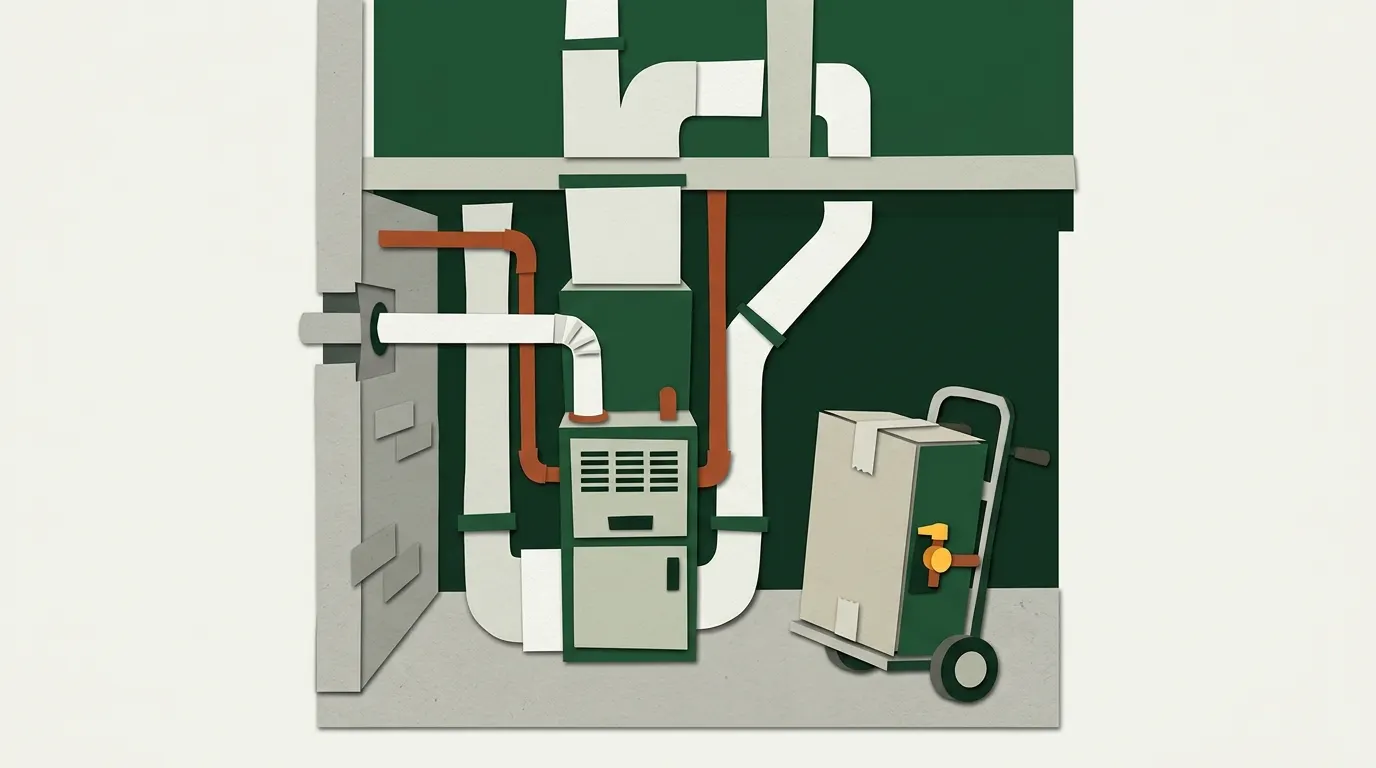
National ballpark · one 80% AFUE gas furnace for a 2,000 sq ft home
This is a planning range, not a quote.
Limited data: gas furnace installed (sources disagree); permit fee (sources disagree). The real range may be wider.
| Cost | Low | Typical | High |
|---|---|---|---|
| Furnace | $2,280 | $4,140 | $6,000 |
| Labor | $1,520 | $2,760 | $4,000 |
| Old furnace removal | $60 | $200 | $330 |
| Permit (varies by city) national | $100 | $800 | $1,500 |
| Total | $3,960 | $7,900 | $11,800 |
How this furnace replacement cost calculator works
Start with your ZIP code, then pick the number of furnaces, the fuel, your home size in square feet and the AFUE tier. AFUE is the share of fuel a furnace turns into heat: an 80 percent furnace turns 80 cents of every fuel dollar into warmth. The calculator takes an installed price for your fuel, scales it to your home size, adds any high-efficiency upgrade and venting, then adds removal of the old furnace and the permit.
The labor and equipment parts are then adjusted for your state. Labor follows construction wages from the Bureau of Labor Statistics, and equipment follows regional price levels from the Bureau of Economic Analysis. Permits stay at the national range, since each city sets its own fee. Our How we calculate page explains the method step by step.
You see three numbers. Low fits a simple swap in an open basement. Typical is where most quotes land. High covers tight spaces, new venting, extra duct changes and the busy heating season. The breakdown under the total lists the furnace, labor, removal and permit, which makes a contractor's quote easy to check line by line.
Furnace cost calculator by fuel
The fuel your furnace burns sets the starting price. Most homes with a gas line replace gas with gas. Homes without gas service usually choose electric, oil or propane.
| Option | Low | Typical | High | Unit |
|---|---|---|---|---|
| Gas * | $3,800 | $6,900 | $10,000 | job |
| Electric * | $2,000 | $4,500 | $7,000 | job |
| Oil | $6,750 | $8,380 | $10,000 | job |
| Propane | $3,350 | $4,800 | $7,750 | job |
* Limited data: one source, sources that disagree widely, or a single figure.
Gas and electric furnaces have the widest spread between our sources, so those rows carry a limited-data note. Oil furnaces cost the most to replace, at $6,750–$10,000 installed, typical $8,380. Propane runs $3,350–$7,750, typical $4,800. Switching fuels, such as from oil to gas, usually adds work this calculator doesn't price, like running a new gas line.
Furnace cost by efficiency (AFUE)
Furnaces come in three efficiency tiers in our calculator: 80 percent, 90–95 percent, and 96 percent or more AFUE. The higher tiers waste less fuel, and they cost more to buy and install.
| Option | Low | Typical | High | Unit |
|---|---|---|---|---|
| 80% | $2,900 | $4,330 | $5,750 | job |
| 90-95% | $3,400 | $6,580 | $9,750 | job |
| 96%+ * | $7,150 | $8,700 | $10,300 | job |
* Limited data: one source, sources that disagree widely, or a single figure.
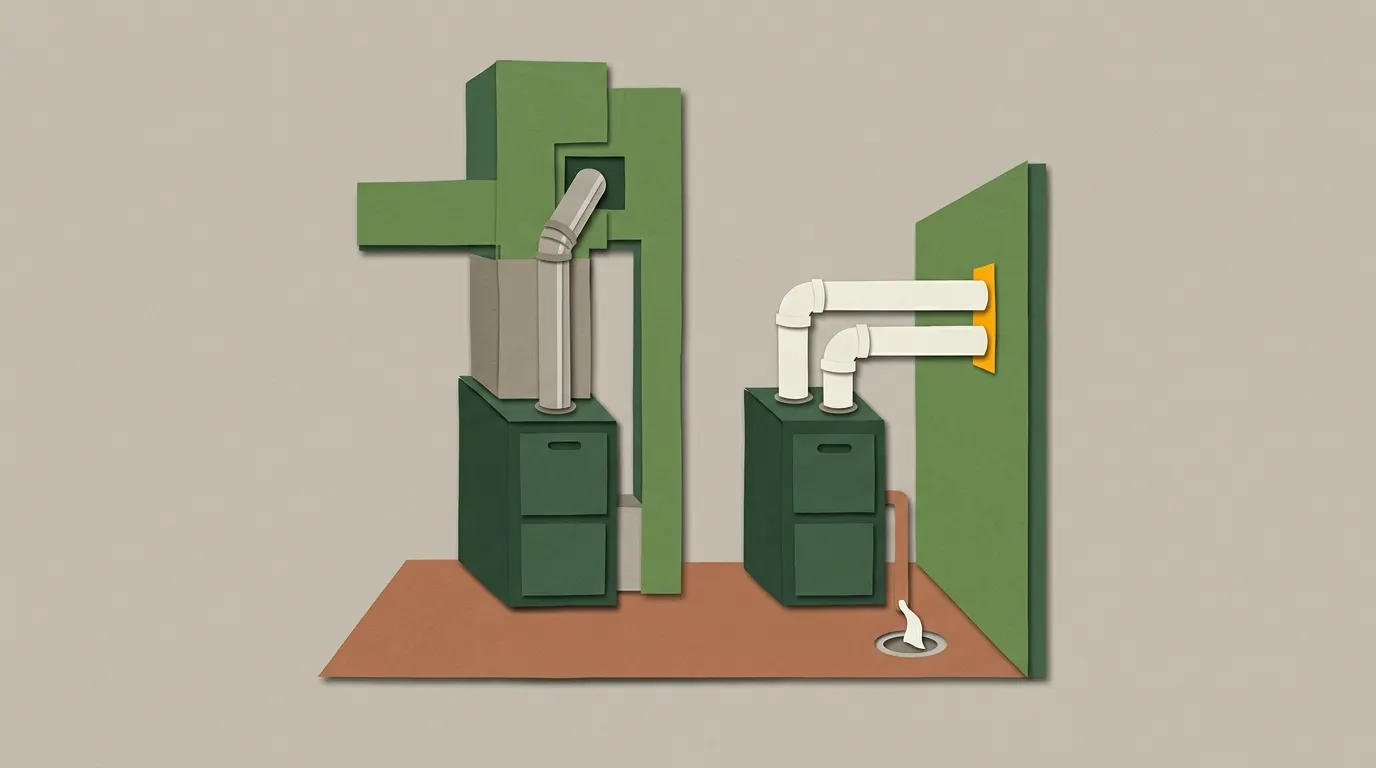
The calculator doesn't use these prices as a total. It adds the difference between your tier and the 80 percent tier to the fuel price. For a 2,000 sq ft gas furnace, moving to 90–95 percent AFUE raises the total to $4,710–$17,300 (typical $11,000), and 96-plus percent to $8,460–$17,800 (typical $13,100). The 96-plus percent row comes from one source, so treat it as a rough guide.
Venting for high-efficiency furnaces
A furnace rated 90 percent or more usually vents through plastic pipes out a side wall instead of a metal flue into the chimney. The calculator adds venting for these tiers at $250–$1,500, typical $880. That figure comes from one source. If your home already has the right venting, ask the contractor to take this line off.
Furnace cost by home size
A larger home needs a furnace with more heating output, which costs more. The calculator compares the typical price for the nearest home-size bracket with the 2,000 sq ft bracket and scales your furnace price by that ratio.
| Option | Low | Typical | High | Unit |
|---|---|---|---|---|
| 1,000 sq ft | $1,200 | $1,600 | $2,000 | job |
| 1,500 sq ft | $2,150 | $3,200 | $4,250 | job |
| 2,000 sq ft | $2,400 | $3,200 | $4,000 | job |
| 2,500 sq ft | $3,500 | $5,130 | $6,750 | job |
| 3,000 sq ft | $3,600 | $4,800 | $6,000 | job |
| 4,000 sq ft | $4,800 | $6,400 | $8,000 | job |
| 5,000 sq ft | $6,000 | $8,000 | $10,000 | job |
The dollar figures in this table come from different sources than the fuel prices and run lower, so the calculator only uses their ratios. The table is uneven in two places. The 1,500 and 2,000 sq ft brackets share the same typical price, $3,200, so those two sizes get the same estimate. The 3,000 sq ft bracket's typical price, $4,800, sits below the 2,500 sq ft bracket's $5,130. A bigger home shouldn't come out cheaper, so the calculator never lets it: a 3,000 sq ft home is priced at least as high as a 2,500 sq ft one.
What affects the price
Fuel and gas line work
Gas is the default and the most common fuel. The price assumes the gas line, shutoff and connection are already in place. Moving the furnace or adding a new line adds labor that our data doesn't price separately.
Efficiency tier
The biggest single choice after fuel. In our data the top tier's typical price, $8,700, is about twice the 80 percent tier's $4,330, and a high-efficiency unit usually adds new venting and a condensate drain (a small line that carries water away).
Home size and furnace capacity
Bigger homes need more output. A contractor should size the furnace with a load calculation, which accounts for insulation, windows and climate, not just square footage.
Old furnace removal
Taking out and disposing of the old furnace runs $60–$330, typical $200. Most contractors include it; check that the quote says so.
The permit
Permits range from $100 to $1,500 in our data, typical $800, with a wide spread between sources. That makes the permit one of the least certain lines in the estimate, and your city's actual fee could be much lower or higher.
Access and ductwork
A furnace in an open basement is the easiest swap. An attic or crawl space install takes longer, and a new furnace that doesn't line up with the old duct connections needs custom sheet metal. Neither is priced separately here, which is why the high end sits well above the typical number.
Furnace replacement cost by state
The calculator puts labor at about 40% of a furnace job, so wages explain much of the difference between states, and equipment prices explain the rest. For our 80 percent AFUE gas example, the typical price is lowest in Arkansas at $7,020, Alabama at $7,150 and Mississippi at $7,160. It's highest in New York at $8,830, Alaska at $8,930 and the District of Columbia at $9,260.
- Alabama$7,150
- Alaska$8,930
- Arizona$7,620
- Arkansas$7,020
- California$8,690
- Colorado$8,040
- Connecticut$8,510
- Delaware$7,790
- District of Columbia$9,260
- Florida$7,610
- Georgia$7,630
- Hawaii$8,590
- Idaho$7,520
- Illinois$8,820
- Indiana$7,680
- Iowa$7,610
- Kansas$7,620
- Kentucky$7,610
- Louisiana$7,520
- Maine$7,870
- Maryland$8,420
- Massachusetts$8,600
- Michigan$7,720
- Minnesota$8,630
- Mississippi$7,160
- Missouri$7,690
- Montana$7,720
- Nebraska$7,590
- Nevada$7,710
- New Hampshire$8,430
- New Jersey$8,820
- New Mexico$7,230
- New York$8,830
- North Carolina$7,580
- North Dakota$8,340
- Ohio$7,700
- Oklahoma$7,470
- Oregon$8,210
- Pennsylvania$7,930
- Rhode Island$8,070
- South Carolina$7,530
- South Dakota$7,720
- Tennessee$7,480
- Texas$7,660
- Utah$7,640
- Vermont$7,830
- Virginia$7,850
- Washington$8,760
- West Virginia$7,180
- Wisconsin$7,690
- Wyoming$7,410
Ways to lower the cost
- Get the size right. Ask for a load calculation instead of matching the old furnace's rating.
- Choose the tier for your climate. Ask each contractor to price two tiers so you can see what the upgrade costs on your house.
- Keep the same fuel and location. Moving the furnace or changing fuels adds labor and parts.
- Ask about the permit. Find out the real fee in your city instead of relying on the national range.
- Plan before it fails. A furnace that dies in a cold snap leaves you little time to compare quotes.
Hiring tips
Ask for at least three written quotes for the same furnace: same fuel, tier and capacity. Each quote should list the furnace, labor, venting, removal, any duct changes, the thermostat and the permit as separate lines. Compare them with the breakdown above, and ask about any line that's far off.
Ask how the contractor sized the furnace and whether they'll test for gas leaks and check the vent once it's in. Get the model number, the warranty on parts and labor, and the install date in writing. Check that the company has a license where your state requires one, and ask for proof of insurance. Bring the ballpark. Ask for the line items.
If you're weighing a heat pump instead, the heat pump cost calculator prices that system. Other jobs in this group are on the Home Systems page.