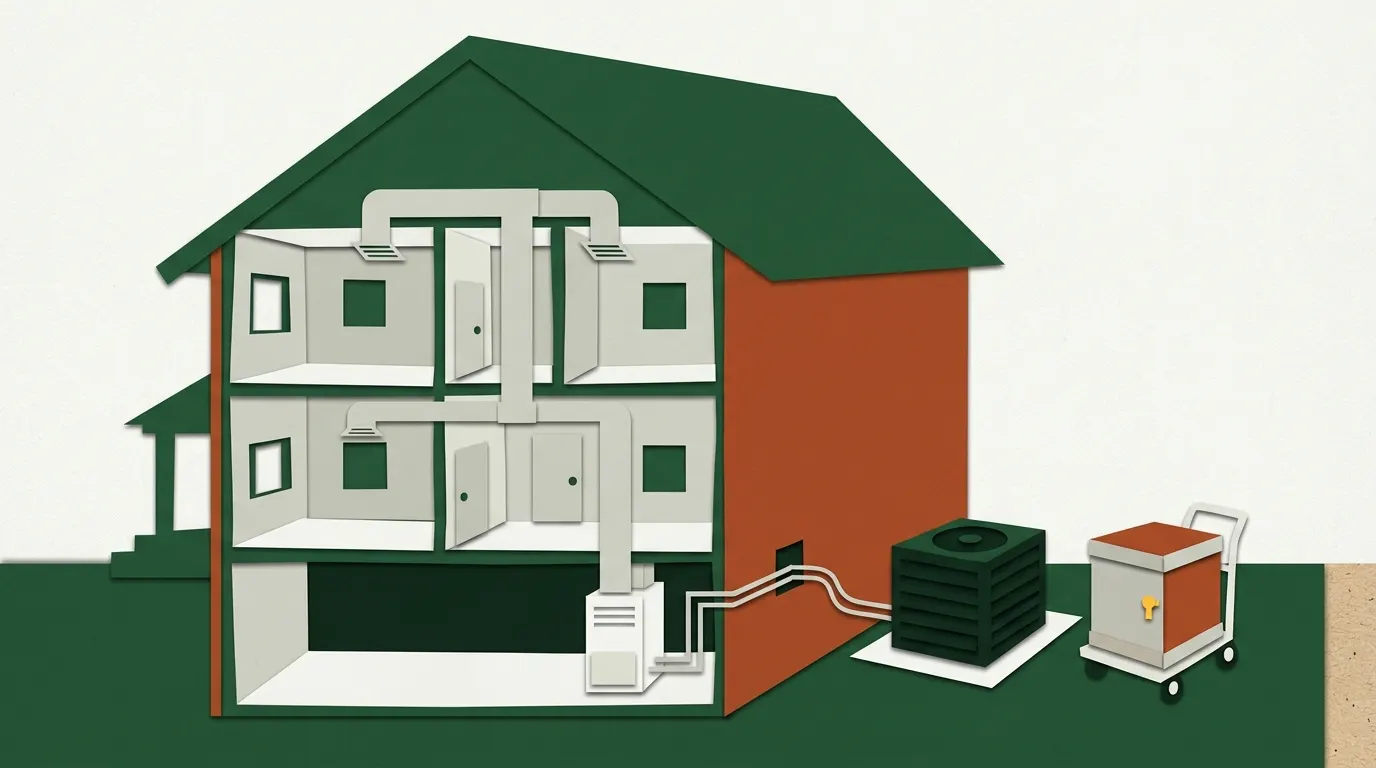
National ballpark · one standard-efficiency central AC for a 2,000 sq ft home, keeping the ducts
This is a planning range, not a quote.
Limited data: permit fee (sources disagree). The real range may be wider.
| Cost | Low | Typical | High |
|---|---|---|---|
| Equipment | $2,300 | $4,860 | $6,830 |
| Labor | $1,700 | $3,600 | $5,050 |
| Old unit removal | $75 | $260 | $450 |
| Permit (varies by city) national | $130 | $310 | $500 |
| Total | $4,200 | $9,040 | $12,800 |
How this HVAC replacement cost calculator works
Enter your ZIP code, the number of units, the system type, your home size, the efficiency tier and what needs to happen with the ducts. The calculator starts from an installed price for that system, scales it for your home size, adds any efficiency upgrade and duct work, then adds old-unit removal and the permit. Last, it adjusts the result for wages and prices in your state.
You get a low, typical and high price. Low is a simple swap with easy access and no surprises. Typical is where most quotes land. High covers tight attics, extra wiring, larger units and busy seasons. The breakdown splits the bill into equipment, labor, removal and the permit, so you can hold it next to a contractor's quote line by line.
The state adjustment uses construction wages from the Bureau of Labor Statistics for the labor share and regional price levels from the Bureau of Economic Analysis for the equipment share. Permit fees stay at the national range, because cities set them. The full method is on our How we calculate page.
HVAC replacement cost by system
The system you pick sets the starting price. A central AC replaces only the cooling side. Furnace + AC replaces both halves of a split system at once. A heat pump heats and cools with one outdoor unit. A ductless mini-split puts small indoor units on the walls and skips ducts entirely.
| Option | Low | Typical | High | Unit |
|---|---|---|---|---|
| Central AC | $4,000 | $8,460 | $11,900 | job |
| Furnace + AC | $7,250 | $10,500 | $16,500 | job |
| Heat pump * | $5,500 | $9,000 | $15,000 | job |
| Ductless mini-split | $2,000 | $8,220 | $10,500 | job |
* Limited data: one source, sources that disagree widely, or a single figure.
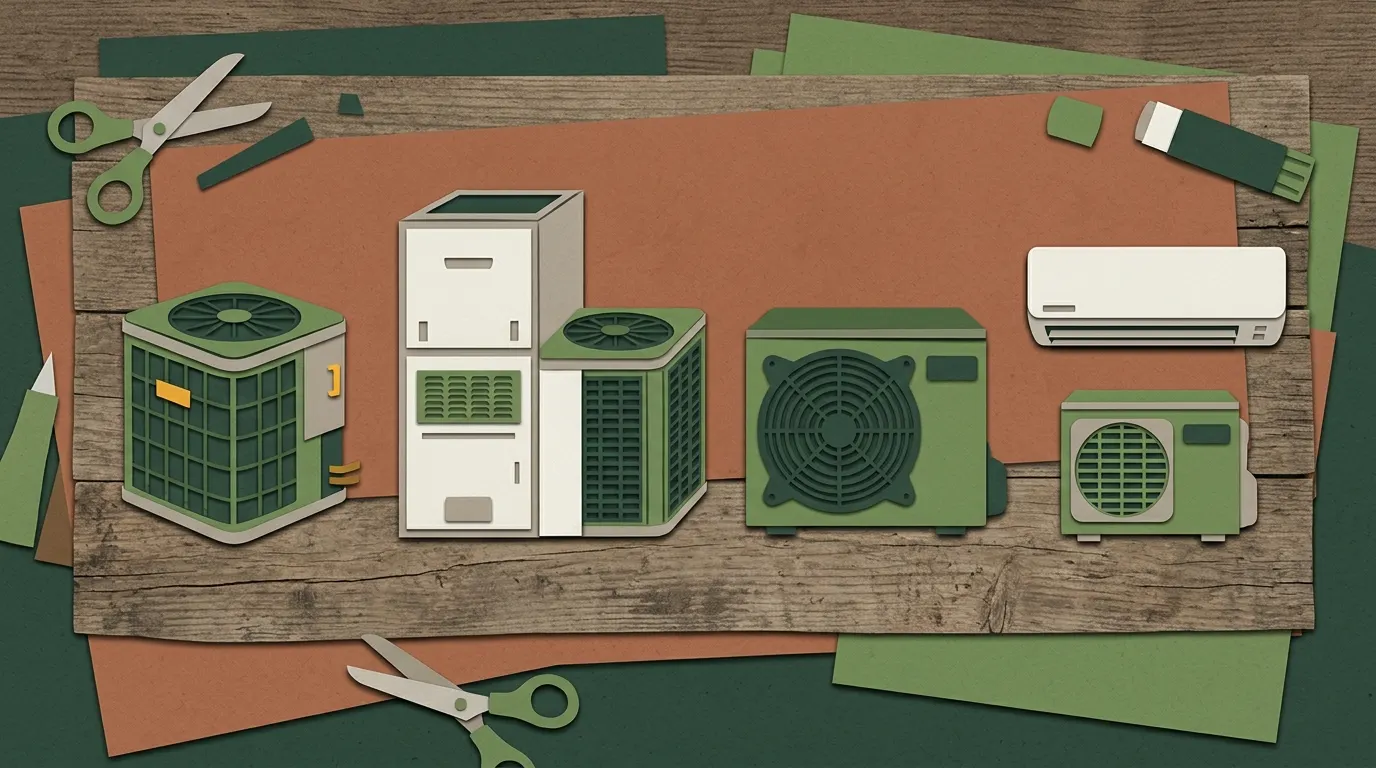
Furnace + AC is the most expensive job in the table, because you're buying two pieces of equipment. Heat pump prices vary the most between our sources, so the range for that row is wider than the others.
Central air cost calculator: AC unit replacement
For most homes with ducts already in place, the job is a central AC swap. A standard-efficiency unit for a 2,000 sq ft home runs $4,000–$11,900 installed, typical $8,460. Removal of the old unit ($75–$450, typical $260) and the permit bring the total to $4,200–$12,800.
If your furnace is about as old as the AC, ask for a price on both. Replacing them together runs $7,450–$17,500, typical $11,100, and it saves a second visit later. If the furnace is fairly new, an AC-only swap is usually the simpler path.
Mini split cost calculator: ductless systems
A ductless mini-split runs $2,000–$10,500 installed in our data, typical $8,220. The low end is a single room. The high end is several indoor heads served from one or more outdoor units. With removal and the permit, the calculator shows $2,200–$11,500, typical $8,800.
Mini-splits make the most sense in homes without ducts, in an addition, or in a room the main system never reaches well. If you pick ductless, leave the ductwork setting on "keep," since there are no ducts to repair.
Heat pump replacement
A heat pump replacement runs $5,700–$16,000 for our 2,000 sq ft example, typical $9,580. Our sources disagree more on heat pumps than on any other system here, so treat this range as rough. The heat pump cost calculator goes deeper on efficiency tiers and ducts for that one system.
What affects the price
Home size
A bigger home usually needs more tonnage (cooling capacity; bigger homes need more tons), and that raises the price. The calculator scales your system price by the typical price of the nearest home-size bracket compared with a 2,000 sq ft home.
| Option | Low | Typical | High | Unit |
|---|---|---|---|---|
| 1,000 sq ft * | $3,000 | $4,500 | $6,000 | job |
| 1,500 sq ft | $3,750 | $6,500 | $9,500 | job |
| 2,000 sq ft | $4,750 | $8,500 | $12,000 | job |
| 2,500 sq ft * | $6,000 | $8,000 | $10,000 | job |
| 3,000 sq ft | $6,750 | $12,000 | $18,500 | job |
* Limited data: one source, sources that disagree widely, or a single figure.
This table is uneven. The 2,500 sq ft bracket comes from one source, and its typical price sits below the 2,000 sq ft bracket. A bigger home shouldn't come out cheaper, so the calculator prices a 2,500 sq ft home at least as high as a 2,000 sq ft one. The 1,000 sq ft bracket is also single-source, so treat the small-home figure as rough.
Efficiency tier
Air conditioners and heat pumps carry a SEER2 rating (cooling efficiency; higher uses less electricity). A higher tier costs more up front. In our data the high tier adds $900–$2,000 (typical $1,450) and the premium tier $2,500–$6,000 (typical $4,250). Sources disagree on both, so the upgrade ranges are rough. For the central AC example, high efficiency moves the total to $5,100–$14,800, and premium to $6,700–$18,800.
Ductwork
Keeping your ducts adds nothing. Repairs add $850–$3,500 and full replacement $2,100–$4,000, with a wide spread between sources on replacement. Leaky or undersized ducts can make a new system work harder, which is why many contractors look at them before quoting.
Old unit removal and the permit
Removal and disposal of the old unit run $75–$450, typical $260. Permits run $130–$500, typical $310. Some quotes fold both into one price, and some list them separately.
Number of units
Larger homes sometimes have two systems, one for each floor. Set the number of units to match what you're replacing. The calculator prices each one at the same size and tier.
When to budget toward the high end
The typical price assumes an easy swap: the new unit fits the old pad and connections, the electrical service is fine and the installer can reach the equipment. Plan nearer the high number if the indoor unit sits in a cramped attic or crawl space, if the electrical panel needs work, if the refrigerant lines need replacing, or if you're switching from one system type to another. A switch, such as from a furnace and AC to a heat pump, often brings extra wiring and duct changes.
HVAC cost by state
Labor is a bit under half of an HVAC bill, so local wages explain most of the gap between states. For our central AC example, the typical price runs from $7,930 in Arkansas and $8,090 in Alabama to $10,200 in Illinois, $10,300 in Alaska and $10,800 in the District of Columbia.
- Alabama$8,090
- Alaska$10,300
- Arizona$8,710
- Arkansas$7,930
- California$10,000
- Colorado$9,230
- Connecticut$9,850
- Delaware$8,920
- District of Columbia$10,800
- Florida$8,670
- Georgia$8,700
- Hawaii$9,890
- Idaho$8,560
- Illinois$10,200
- Indiana$8,770
- Iowa$8,700
- Kansas$8,700
- Kentucky$8,690
- Louisiana$8,570
- Maine$9,020
- Maryland$9,710
- Massachusetts$9,970
- Michigan$8,830
- Minnesota$10,000
- Mississippi$8,100
- Missouri$8,790
- Montana$8,830
- Nebraska$8,670
- Nevada$8,820
- New Hampshire$9,750
- New Jersey$10,200
- New Mexico$8,190
- New York$10,200
- North Carolina$8,640
- North Dakota$9,640
- Ohio$8,810
- Oklahoma$8,510
- Oregon$9,420
- Pennsylvania$9,090
- Rhode Island$9,280
- South Carolina$8,580
- South Dakota$8,830
- Tennessee$8,510
- Texas$8,740
- Utah$8,720
- Vermont$8,970
- Virginia$8,980
- Washington$10,100
- West Virginia$8,120
- Wisconsin$8,790
- Wyoming$8,420
Ways to lower the cost
- Match the system to the job. If only the AC is failing and the furnace is young, an AC-only swap costs far less than replacing both.
- Get the size right. Ask each contractor how they sized the unit. A load calculation beats matching the old unit's tonnage.
- Weigh the efficiency tier. A premium tier adds thousands up front; ask each contractor how the tiers compare for your climate and use.
- Fix ducts only where needed. Ask for the duct test results before agreeing to full replacement.
- Ask about timing. If your old system still runs, ask whether a slower season changes the price.
Hiring tips
Get at least three written quotes for the same system: same type, size, efficiency tier and duct work. Ask each contractor to list equipment, labor, removal, duct work and the permit as separate lines, then compare them with the breakdown above. A quote far below our low number deserves questions about what's left out, such as the line set, the pad or the thermostat.
Ask how the contractor sized the new system and whether they checked the ducts. Get the equipment model, the warranty terms on parts and labor, and the start date in writing. Check that the company has a license where your state requires one, and ask for proof of insurance. Bring the ballpark. Ask for the line items.
If you're also weighing a heating-only job, the furnace replacement cost calculator prices furnaces by fuel, size and AFUE. Other home system jobs are on the Home Systems page.